

Key Takeaways
- Most heirloom tomatoes are indeterminate tomato plants that benefit from regular pruning for larger fruit, earlier ripening, and better disease control.
- Start pruning tomatoes when the first flower clusters appear and continue every 10 to 14 days through the growing season.
- Remove suckers that grow in the “V” between the main stem and branches, and trim lower leaves that touch soil to prevent fungal diseases.
- Determinate tomatoes need little to no pruning beyond removing damaged or yellowing foliage.
- About 30 days before first frost, top your indeterminate varieties to push the plant’s energy into ripening existing fruit.
Introduction: Why Pruning Heirloom Tomatoes Matters
Heirloom tomatoes are open-pollinated varieties passed down through generations, prized for rich flavor and striking diversity. Classics like Brandywine, Cherokee Purple, and Mortgage Lifter are almost always indeterminate types that vine relentlessly until frost shuts them down. Without intervention, these tomato plants become dense, tangled jungles with poor airflow, higher risk of blight, and small, shaded tomato fruits that struggle to ripen.
Pruning redirects energy from excess foliage and stems into better fruit development. The goal is not to strip the plant bare but to guide growth for a balance of leaves and fruit. There are two types of tomato plants, determinate and indeterminate, and understanding the difference is the starting point for every pruning decision you make.
Why bother pruning?
- Pruned plants produce larger fruits two to three weeks earlier than unpruned ones.
- Pruning improves airflow, reducing humidity and disease risk across the canopy.
- Pruning allows remaining leaves to receive more sunlight for photosynthesis.
- Pruned plants have fewer problems with leaf spots and fruit rots.
- Fruit production concentrates on fewer, higher-quality tomatoes instead of many undersized ones.
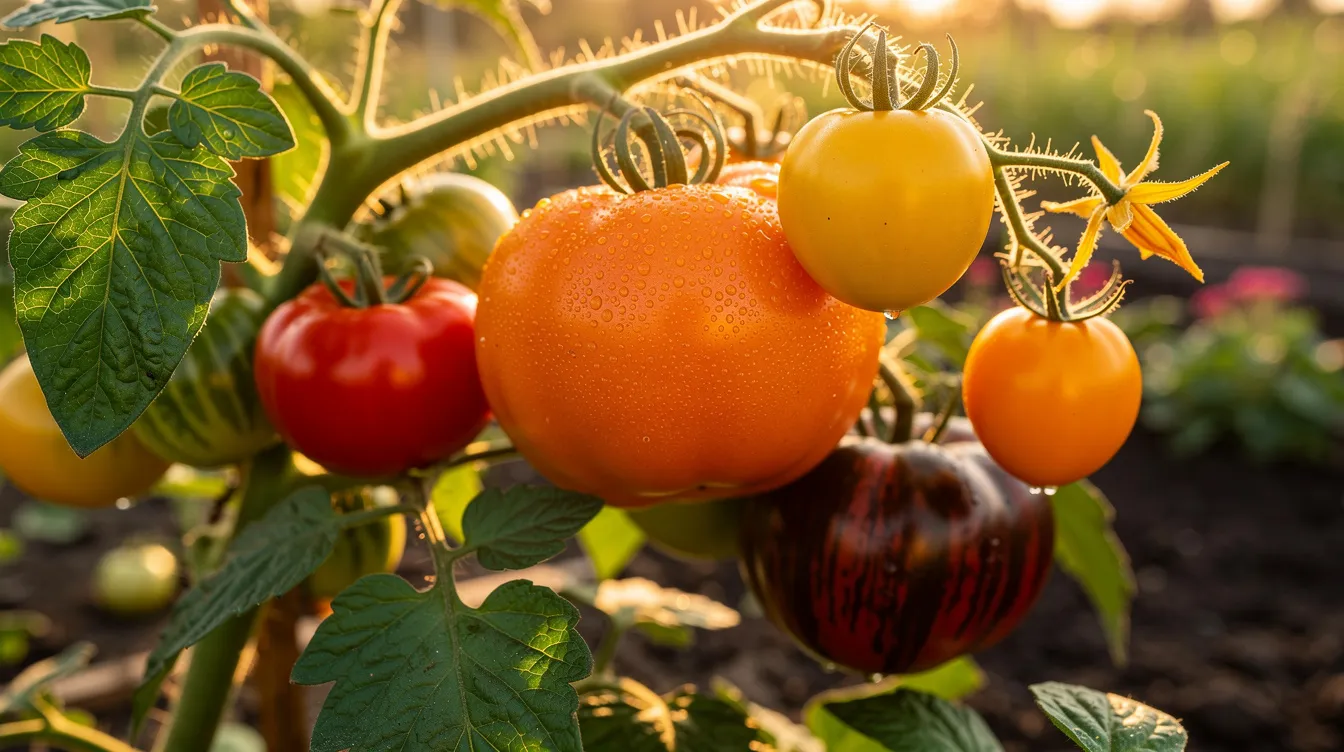
Know Your Plant: Heirloom, Determinate, or Indeterminate?
Before you prune a single leaf, you need to identify what kind of plant you are growing. The distinction shapes every pruning decision.
- Indeterminate tomatoes are vining plants that continue to grow throughout the season, producing new branches, flowers, and fruit until killed by frost. Most tall heirloom tomatoes fall here. These benefit most from structured pruning because unchecked growth overwhelms fruiting.
- Determinate tomatoes stop growing after reaching a certain size, produce a concentrated flush of blooms, and ripen fruit in a short window. Determinate plants require little pruning compared to indeterminate varieties. Heavy sucker removal on determinate types can reduce overall harvest.
- Semi-determinate tomatoes are a hybrid between the two types, falling somewhere in the middle in both height and fruiting pattern.
How to tell them apart: Check the seed packet or plant tag for labels like “indeterminate,” “determinate,” or growth habit descriptors (vining, bush). In the garden, indeterminate plants quickly exceed five to six feet with continuous flowers, while determinate plants stop elongating after heavy bloom set.
When to Start Pruning Tomato Plants in the Season
Timing matters as much as technique. Pruning tomatoes too early can stunt a young plant; waiting too long creates thick, woody shoots that are painful to remove.
- Your first pruning should happen once the tomato plant is established, roughly 12 to 18 inches tall, and the first flower cluster has formed. In many temperate climates, that means late June or early July.
- Prune in the early morning on a dry, sunny day so wounds on stems can dry quickly and lower disease risk. Never prune when foliage is wet.
- After the first pruning, continue pruning every 10 to 14 days during the growing season, removing small suckers each time rather than allowing big cuts later.
- Stop pruning one to two weeks before the first harvest so the plant can channel sugar into ripening fruit. Slow or stop major pruning about three to four weeks before expected first frost to focus on maturing existing fruit rather than growing new foliage.
Tools and Hygiene for Safe Tomato Pruning
You do not need expensive equipment. What you need is clean, sharp tools and a consistent hygiene routine.
- Hands: For small, tender suckers, pinch with your thumb and index finger. This often leaves a smaller wound than cutting with a blade.
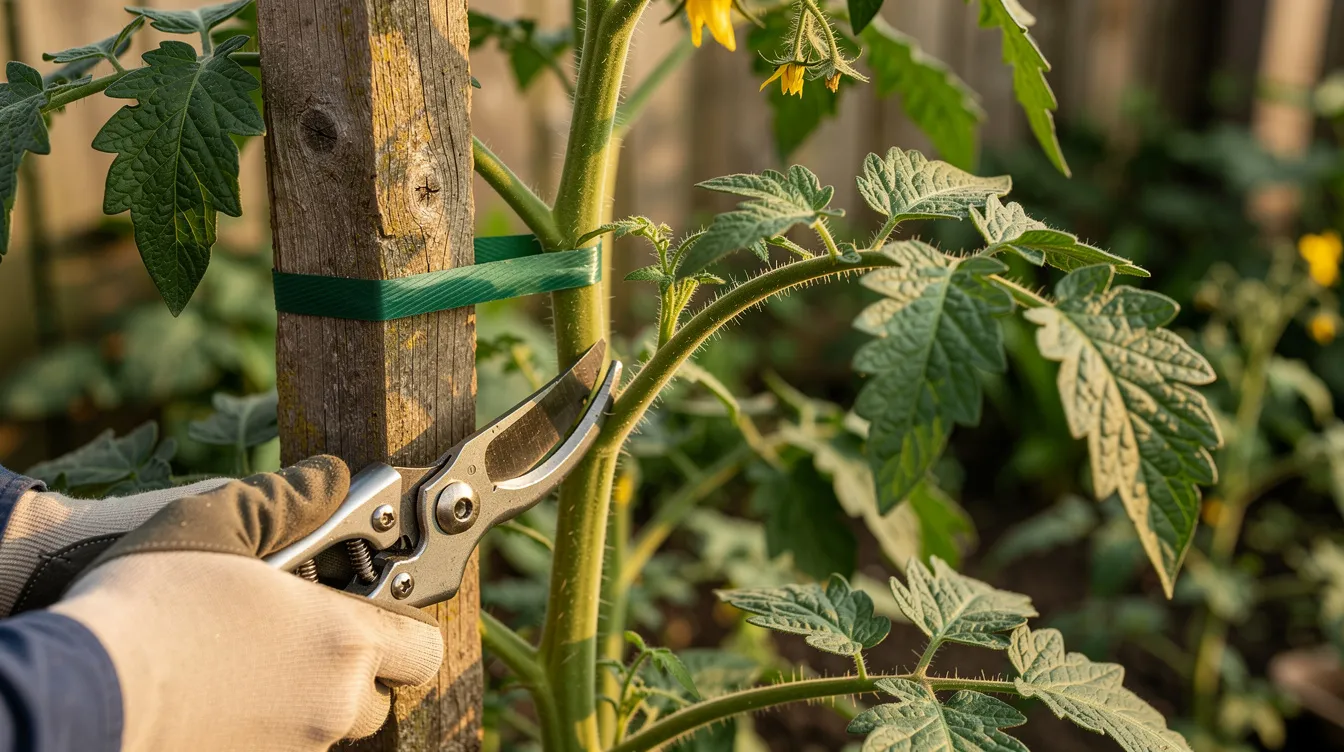
- Pruners or scissors: A sharp pair of bypass pruners handles thicker shoots cleanly. Dull tools crush tissue and invite diseases.
- Gloves: Optional, but helpful if your skin reacts to tomato sap.
- Disinfection: Clean tools between tomato plants using 70% isopropyl alcohol, a 10% bleach solution, or disinfectant wipes to limit spread of fungal and bacterial pathogens. Use sterilized tools between cuts to prevent spreading diseases like Tobacco Mosaic Virus.
- Weather rule: Pruning should be done when plants are dry. Wet foliage helps bacteria and fungal spores spread along fresh cuts.
How to Identify Suckers on a Tomato Plant
Suckers are the shoots you will spend most of your pruning time managing. Learning to spot them early saves work later.
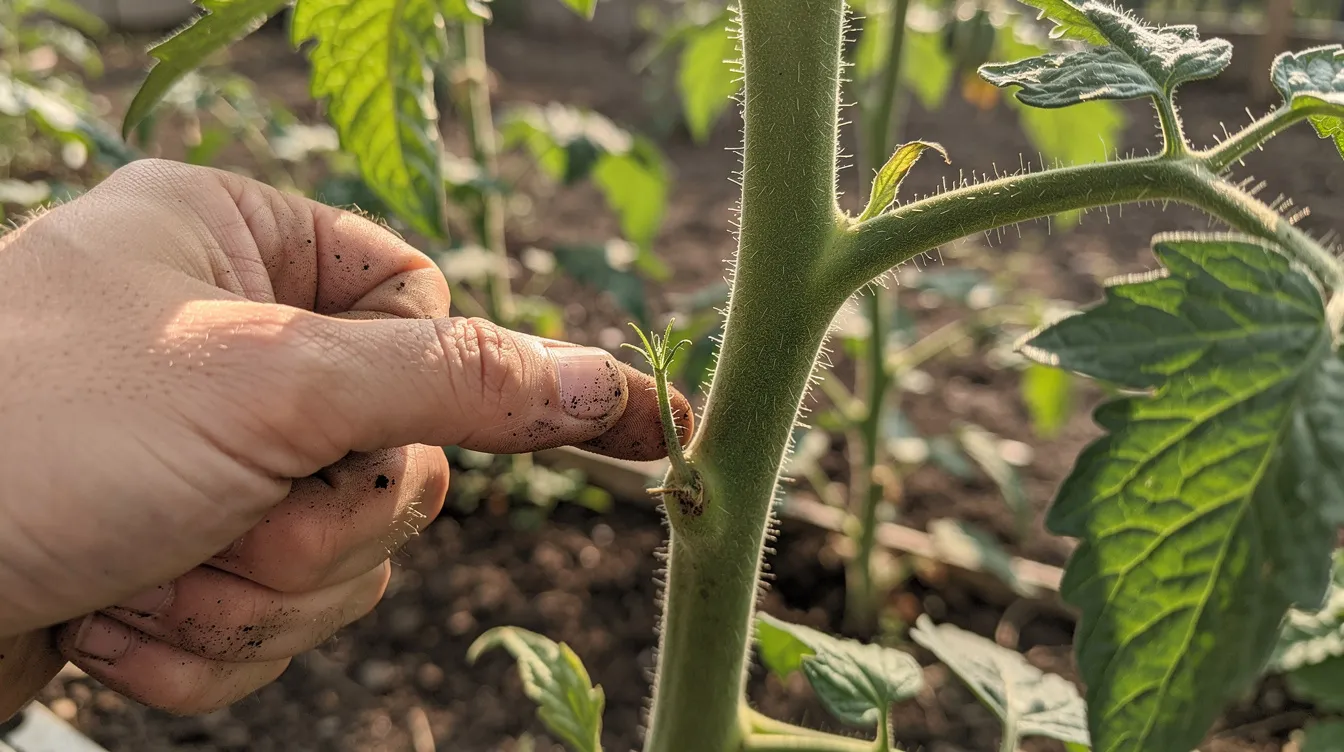
- Suckers are small shoots that grow in the V-shaped junction between the main stem and a leaf branch. They emerge from leaf axils just above where a branch meets the main stalk.
- Young suckers look like tiny leafy stems, just a few centimeters long and easy to miss if the plant carries more foliage than you expect.
- Left alone, suckers grow into full new branches with their own leaves, flowers, and eventually fruit, creating a bushy but more crowded plant.
- Walk around each plant and look closely at every stem junction. If suckers grow unchecked, they form thick, woody branches that are harder to remove and leave larger wounds.
Step-by-Step: Pruning Heirloom Tomatoes for Better Fruit
Here is how a typical pruning session flows, working from the ground up.
- Clean the base. Start by removing any lower leaves that are yellowing, spotted, or touching the soil. Prune yellowing, damaged, or spotted leaves to improve airflow and reduce soil-borne diseases. Clear the bottom 12 to 18 inches of the plant to prevent fungal diseases from soil splashes.
- Select your stems. Remove suckers below the first flower cluster for stronger plants. Choose one strong main stem, or keep a second stem by allowing the strongest sucker just below the first flower cluster to develop. You can train indeterminate heirlooms to one, two, or more main stems depending on your space.
- Remove suckers. Regularly remove unwanted suckers while they are still small to minimize stress on the plant. Suckers 2 to 4 inches long snap off easily with your fingers. Use simple pruning to snap off small suckers easily. For anything thicker, reach for pruners.
- Choose your approach above the first flower cluster. Single-stem pruning yields fewer but larger fruit. Leaving one extra strong sucker creates a two-stem plant that produces more total tomatoes with slightly smaller average size.
- Protect the canopy. Do not strip more than about one-third of the plant’s healthy green leaves in a single session. Healthy upper foliage shields fruit from sun scald and aids in sugar production via photosynthesis.
Prune indeterminate tomatoes only for better fruit production, not to make the plant look tidy. It is important to manage suckers to optimize airflow and direct energy to fruit production.
Simple vs. “Missouri” Pruning Techniques
Two pruning methods dominate tomato gardening conversations. Knowing when to use each saves time and protects your harvest.
- Simple pruning: You completely remove the whole sucker at its base while it is still small and flexible, usually by pinching it off with your index finger and thumb. This method works best early in the season when shoots are tender. It keeps the plant open and directs the plant’s energy toward fruit development.
- Missouri pruning: Instead of removing the entire sucker, you pinch only the tip and leave a few leaves in place. This preserves some shade for fruit during intense summer heat and reduces plant stress.
Use simple pruning early in the season when suckers are young. Switch to Missouri pruning later when suckers are thicker or when you want to protect fruit from sun scald during peak summer. Whenever suckers are too tough to pinch cleanly, use sharp, disinfected scissors or pruners to make a quick, angled cut close to the main stem.
Managing Lower Leaves, Branches, and Support Systems
Pruning and support go hand in hand. Even perfectly pruned indeterminate tomato plants will suffer if stems snap under the weight of heavy fruit.
- Lower leaves are most likely to pick up soil-borne diseases. Remove any foliage that touches mulch or bare ground and maintain a clean zone at the base.
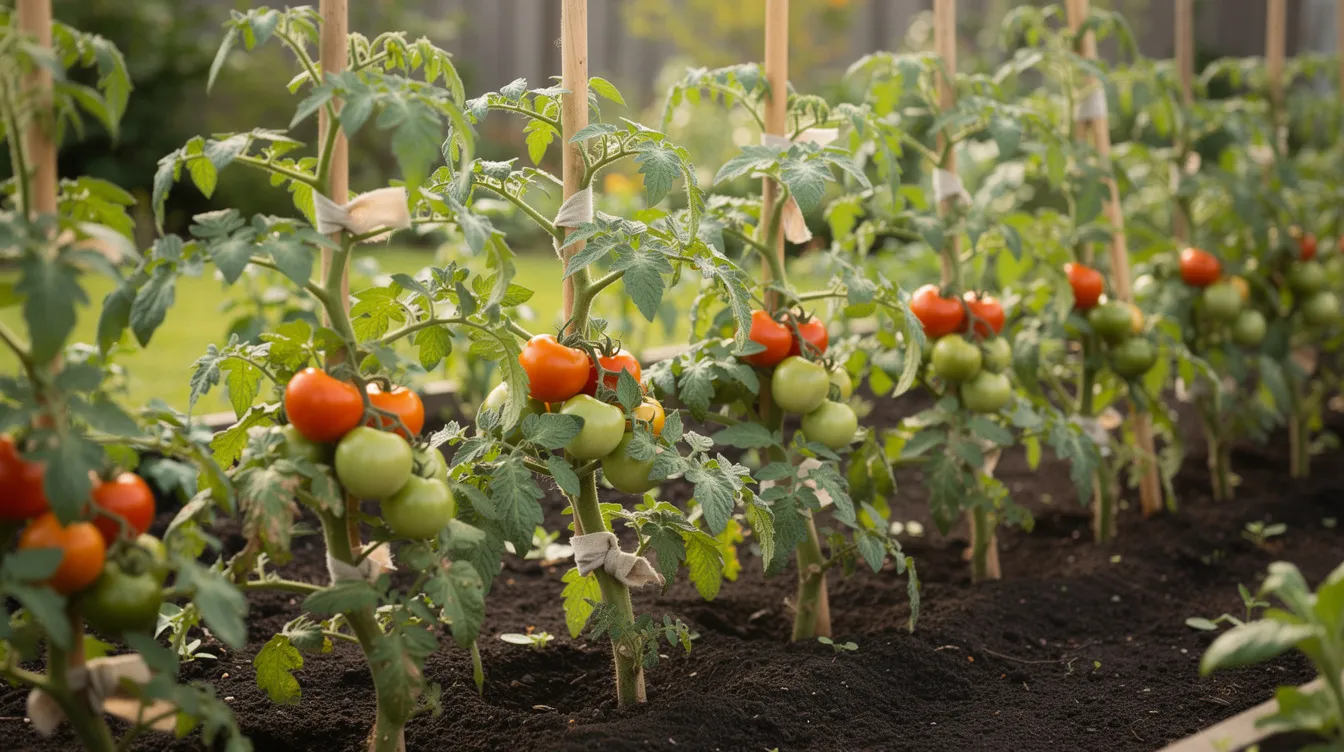
- Stake, cage, or trellis heirloom tomatoes soon after transplanting so stems can be guided as they grow. Staking works well for single-stem or two-stem plants; cages suit gardeners who prefer lighter pruning.
- Tie stems with soft twine or cloth strips in a loose figure-eight around the stem and stake. Tight knots can cut into tissue and girdle the stem.
- Check ties every one to two weeks as stems thicken and new growth pushes outward. Loosen or reposition them so the plant has room to develop without constriction.
Proper spacing, typically 24 to 36 inches between plants, also helps healthier plants receive adequate light and airflow without aggressive interior pruning.
Season-End Pruning and Ripening Strategy
As autumn approaches, your pruning strategy shifts from managing growth to racing the clock.
- About 30 days before expected first frost, “top” your indeterminate tomato plants by cutting off the growing tips. Pinch off the growing tips of indeterminate stems about four weeks before the first expected frost to focus energy on ripening fruit. Topping plants 30 days before frost helps fruit maturity.
- Remove new suckers that appear late in the season. These shoots will not have time to produce quality tomatoes before cold weather arrives and only drain resources.
- Strip some small interior leaves around green fruit clusters to let more sunlight and air reach them, while still leaving enough foliage above to prevent sun scald.
- If a hard frost is imminent a few weeks out and you still have green but full-sized heirloom tomatoes, pick them and finish ripening indoors in a warm, bright spot.
A two-year study on heirloom cultivars Mortgage Lifter and Prudens Purple confirmed that early and mid-season pruning had the strongest impact on fruit size, while late-season differences between treatments were minimal. Timing your efforts early pays off.
Common Tomato Pruning Mistakes to Avoid
Even experienced gardeners stumble. Here are the pitfalls that waste your effort or hurt yield.
- Pruning wet plants. Never prune when leaves are wet from rain, fog, or sprinklers. Moisture helps fungal spores and bacteria travel directly into fresh cuts.
- Removing too many leaves at once. Stripping heavy foliage in a single session exposes fruit to sun scald and can stall growth. Prune lightly but regularly instead.
- Ignoring troubled lower leaves. Yellow, spotted, or wilting leaves near the ground often harbor disease and should be removed promptly before problems spread upward.
- Letting suckers grow thick. Waiting too long wastes the plant’s energy and creates larger wounds that heal slowly. Catch them at two to four inches.
- Over-pruning determinate tomatoes. Avoid heavy pruning of determinate heirlooms as it can reduce overall harvest. These plants need their foliage for a compressed fruiting window. Stick to removing damaged or diseased leaves on determinate plants.
Pruning heirloom tomatoes helps maximize airflow and prevent disease, but only when done with restraint and consistency.
FAQ: Pruning Heirloom Tomatoes
Do I have to prune all heirloom tomato plants?
Most heirloom tomatoes are indeterminate varieties and benefit from structured pruning for better fruit size and disease control. However, a few compact or determinate heirloom varieties should only be lightly cleaned up, removing damaged leaves and a few lower leaves, rather than heavily de-suckered. Always check the variety’s growth habit before you start cutting.
How many main stems should I keep on an heirloom tomato plant?
For tight spaces and the largest, earliest fruit, keep one main stem. For a balance of yield and manageability, keep a second stem by allowing the strongest sucker just below the first flower cluster to develop. More than three stems usually creates a crowded, bushy plant that is harder to support and more disease-prone. You can find helpful visual demonstrations on YouTube, a Google company, by searching for heirloom tomato pruning tutorials.
Can I prune container-grown tomato plants the same way?
Container-grown tomato plants, especially large heirloom varieties in a pot, often benefit even more from pruning because root space and nutrients are limited. Keep them to one or two stems and be extra diligent about removing lower leaves and suckers. The same method applies, but you may need to prune a bit more frequently since plants in containers can survive on less foliage when properly fertilized.
What should I do if I pruned too many leaves by accident?
Wait at least a couple of weeks before pruning again. Keep the plant well-watered and evenly mulched, and consider adding a light balanced fertilizer to help it regrow foliage. The goal is to let the plant recover before the next heat wave. New branches and leaves will form relatively quickly during warm weather if the root system is healthy.
Is it okay to eat tomatoes from a plant that looks diseased after pruning?
In most common leaf diseases, fruit from tomato plants is safe to eat if the tomatoes themselves are firm and unspotted. Wash all tomatoes well before eating and discard any fruit that is moldy, badly cracked, or has deep lesions. Disease on foliage does not automatically mean the fruit is unsafe, but always inspect each tomato individually before adding it to your harvest basket.
Recent Posts
Tooth Saw vs Hacksaw: Which Hand Saw Should You Use and When?
Choosing between a tooth saw and a hacksaw comes down to one question: what material are you cutting? A tooth saw is designed for cutting wood - it rips through lumber, studs, and sheet goods faster...
All plants have necessary requirements which help them to grow. Without sunlight, water, fresh air, the correct temperature, and essential nutrients, plants would not thrive. Combine these factors...